Because of you…

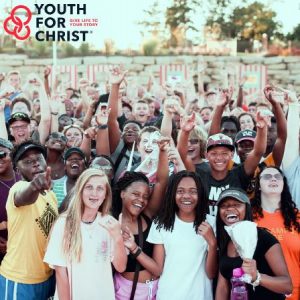
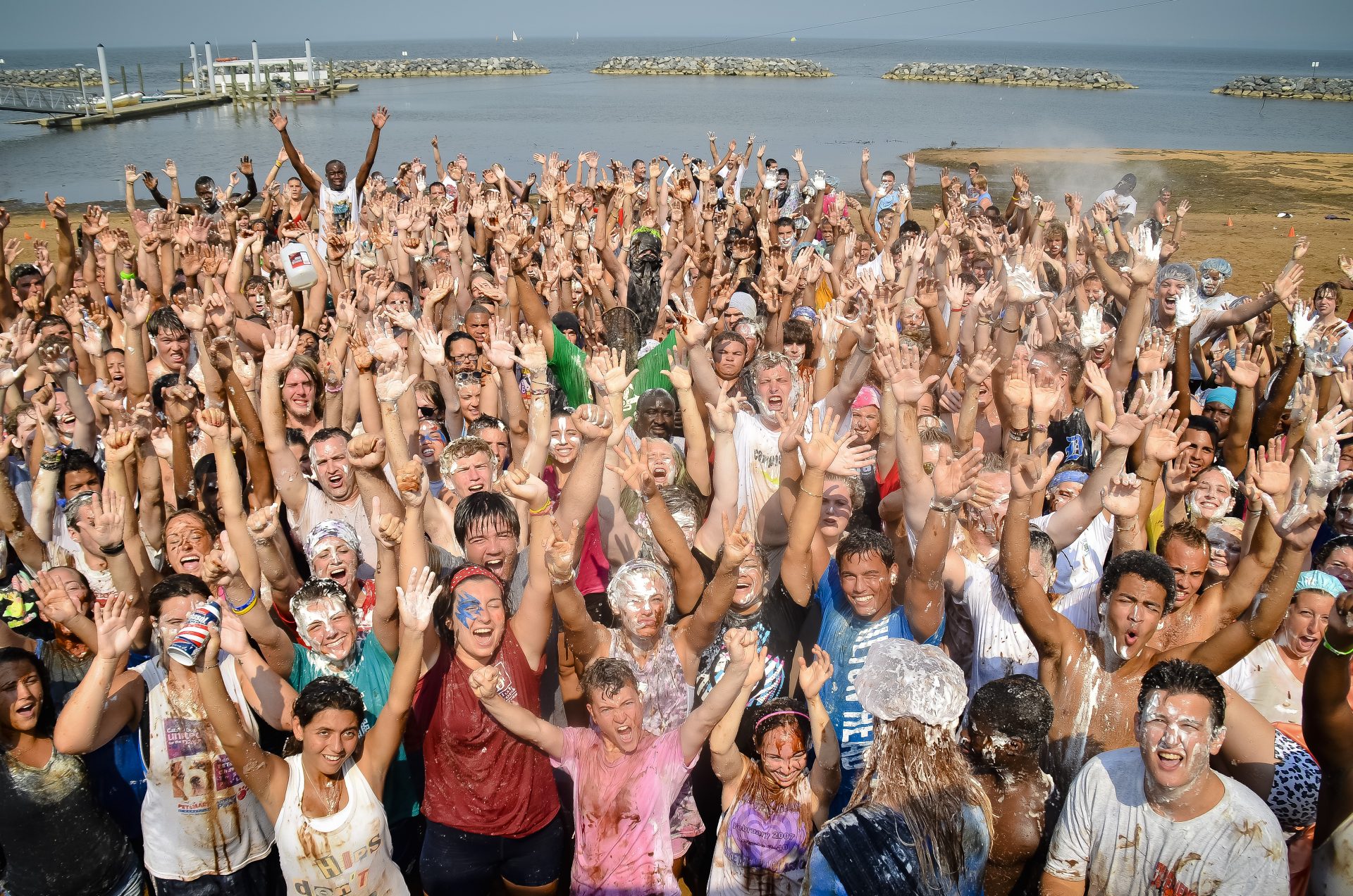
Youth for Christ has over 190 centres in the USA ministering to the nation’s youth through Junior and Senior High campus clubs; Teen Parents; Youth Guidance; drop-in centres (neighbourhoods); foster care; concerts; camps; retreats; evangelism training; service projects, mission trips and much more.

If you live in the USA and are looking to serve in another country, we encourage you to visit: http://www.yfc.net/worldoutreach

Prayer Needs

  • Guidance and unity as Youth for Christ’s work grows.
  • Preparation and recruitment for mission trips.
  • Continued effectiveness of ministry teams in the country.
  • Spiritual growth of youth who have come to Jesus.
  • Continued care and development for staff and volunteers.

About The United States

United States

Introduction

Britain's American colonies broke with the mother country in 1776 and were recognized as the new nation of the United States of America following the Treaty of Paris in 1783. During the 19th and 20th centuries, 37 new states were added to the original 13 as the nation expanded across the North American continent and acquired a number of overseas possessions. The two most traumatic experiences in the nation's history were the Civil War (1861-65), in which a northern Union of states defeated a secessionist Confederacy of 11 southern slave states, and the Great Depression of the 1930s, an economic downturn during which about a quarter of the labor force lost its jobs. Buoyed by victories in World Wars I and II and the end of the Cold War in 1991, the US remains the world's most powerful nation state. Over a span of more than five decades, the economy has achieved steady growth, low unemployment and inflation, and rapid advances in technology.

Geography

Location

Location: North America, bordering both the North Atlantic Ocean and the North Pacific Ocean, between Canada and Mexico
Geographic Coordinates: 38 00 N, 97 00 W

Area

Total Area: 9,826,675 sq km Rank: 3
Land Area: 9,161,966 sq km
Water Area: 664,709 sq km
Note: includes only the 50 states and District of Columbia
Comparison: about half the size of Russia; about three-tenths the size of Africa; about half the size of South America (or slightly larger than Brazil); slightly larger than China; more than twice the size of the European Union
Land Boundaries: 12,034 km
Bordering Countries: Canada 8,893 km (including 2,477 km with Alaska), Mexico 3,141 km
Coastline: 19,924 km

Climate

mostly temperate, but tropical in Hawaii and Florida, arctic in Alaska, semiarid in the great plains west of the Mississippi River, and arid in the Great Basin of the southwest; low winter temperatures in the northwest are ameliorated occasionally in January and February by warm chinook winds from the eastern slopes of the Rocky Mountains

Terrain

vast central plain, mountains in west, hills and low mountains in east; rugged mountains and broad river valleys in Alaska; rugged, volcanic topography in Hawaii

Elevations

Lowest Point: Death Valley -86 m
Highest Point:Mount McKinley 6,198 m
Note: the peak of Mauna Kea (4,207 m above sea level) on the island of Hawaii rises about 10,200 m above the Pacific Ocean floor; by this measurement, it is the world's tallest mountain - higher than Mount Everest, which is recognized as the tallest mountain above sea level

Natural Resources

coal, copper, lead, molybdenum, phosphates, uranium, bauxite, gold, iron, mercury, nickel, potash, silver, tungsten, zinc, petroleum, natural gas, timber
Note: the US has the world's largest coal reserves with 491 billion short tons accounting for 27% of the world's total

Land Use

Arable land: 18.01%
Permanent Crops: 0.21%
Other: 81.78% (2005)
Irrigated Land: 223,850 sq km (2003)
Renewable Water Resources: 3,069 cu km (1985)
Total Freshwater withdrawal (domestic/industrial/agricultural): 477 cu km/yr (13%/46%/41%)
Freshwater Withdrawal Per Capita: 1,600 cu m/yr (2000)

Environment

Natural Hazards: tsunamis; volcanoes; earthquake activity around Pacific Basin; hurricanes along the Atlantic and Gulf of Mexico coasts; tornadoes in the Midwest and Southeast; mud slides in California; forest fires in the west; flooding; permafrost in northern Alaska, a major impediment to development
Environmental Issues: air pollution resulting in acid rain in both the US and Canada; the US is the largest single emitter of carbon dioxide from the burning of fossil fuels; water pollution from runoff of pesticides and fertilizers; limited natural fresh water resources in much of the western part of the country require careful management; desertification
Environmental Agreements: Party to: Air Pollution, Air Pollution-Nitrogen Oxides, Antarctic-Environmental Protocol, Antarctic-Marine Living Resources, Antarctic Seals, Antarctic Treaty, Climate Change, Desertification, Endangered Species, Environmental Modification, Marine Dumping, Marine Life Conservation, Ozone Layer Protection, Ship Pollution, Tropical Timber 83, Tropical Timber 94, Wetlands, Whaling

Geography Notes

world's third-largest country by size (after Russia and Canada) and by population (after China and India); Mt. McKinley is highest point in North America and Death Valley the lowest point on the continent

People

Population: 307,212,123 (July 2010 est.) Rank: 3

Age Structure

0-14 years: 20.2% (male 31,639,127/female 30,305,704)
15-64 years: 67% (male 102,665,043/female 103,129,321)
65 years and over: 12.8% (male 16,901,232/female 22,571,696) (2010 est.)
Median Age: 35.5 years

Population Growth

Growth Rate: 0.977% (2010 est.) Rank: 130
Birth Rate: 13.83 births/1,000 population (2010 est.) Rank: 154
Death Rate: 8.38 deaths/1,000 population (July 2010 est.) Rank: 99
Net Migration Rate: 4.32 migrant(s)/1,000 population (2010 est.) Rank: 25

Urbanization

Urban Population: 82% of total population (2008)
Rate of Urbanization: 1.3% annual rate of change (2005-10 est.)

Life and Death

Infant Mortality Rate: 6.22 deaths/1,000 live births Rank: 180
Life Expectancy at Birth: 78.11 years Rank: 49
Fertility Rate: 2.06 children born/woman (2010 est.) Rank: 126

Health and Disease

HIV/AIDS - Adult Prevalence Rate: 0.6% (2007 est.) Rank: 70
People living with HIV/AIDS: 1.2 million (2007 est.) Rank: 9
HIV/AIDS Deaths: 22,000 (2007 est.) Rank: 21

Nationality and Culture

Noun: American(s)
Adjective: American
Ethnic Groups: white 79.96%, black 12.85%, Asian 4.43%, Amerindian and Alaska native 0.97%, native Hawaiian and other Pacific islander 0.18%, two or more races 1.61% (July 2007 estimate)
Note: a separate listing for Hispanic is not included because the US Census Bureau considers Hispanic to mean persons of Spanish/Hispanic/Latino origin including those of Mexican, Cuban, Puerto Rican, Dominican Republic, Spanish, and Central or South American origin living in the US who may be of any race or ethnic group (white, black, Asian, etc.); about 15.1% of the total US population is Hispanic
Religion: Protestant 51.3%, Roman Catholic 23.9%, Mormon 1.7%, other Christian 1.6%, Jewish 1.7%, Buddhist 0.7%, Muslim 0.6%, other or unspecified 2.5%, unaffiliated 12.1%, none 4% (2007 est.)
Languages: English 82.1%, Spanish 10.7%, other Indo-European 3.8%, Asian and Pacific island 2.7%, other 0.7% (2000 census)

Education

Literacy (Meaning, age 15 and over can read and write): 99% Male: 99% Female: 99% (2003 est.)
School life expectancy (primary to tertiary education): 16 years Male: 15 years Female: 16 years (2006)
Education expenditures: 5.3% of GDP (2005) Rank: 57

Government

Country Name

Conventional Long Form: United States of America
Conventional Short Form: United States
Abbreviation: US or USA
Government Type: Constitution-based federal republic; strong democratic tradition
Capital: Washington, DC Geographic Coordinates: 38 53 N, 77 02 W

Administrative divisions

50 states and 1 district*; Alabama, Alaska, Arizona, Arkansas, California, Colorado, Connecticut, Delaware, District of Columbia*, Florida, Georgia, Hawaii, Idaho, Illinois, Indiana, Iowa, Kansas, Kentucky, Louisiana, Maine, Maryland, Massachusetts, Michigan, Minnesota, Mississippi, Missouri, Montana, Nebraska, Nevada, New Hampshire, New Jersey, New Mexico, New York, North Carolina, North Dakota, Ohio, Oklahoma, Oregon, Pennsylvania, Rhode Island, South Carolina, South Dakota, Tennessee, Texas, Utah, Vermont, Virginia, Washington, West Virginia, Wisconsin, Wyoming
Dependent Areas: American Samoa, Baker Island, Guam, Howland Island, Jarvis Island, Johnston Atoll, Kingman Reef, Midway Islands, Navassa Island, Northern Mariana Islands, Palmyra Atoll, Puerto Rico, Virgin Islands, Wake Island
Independence: 4 July 1776 (from Great Britain)
National holiday: Independence Day, 4 July (1776)
Constitution: 17 September 1787, effective 4 March 1789
Legal system: federal court system based on English common law; each state has its own unique legal system of which all but one (Louisiana, which is still influenced by the Napoleonic Code) is based on English common law; judicial review of legislative acts; has not accepted compulsory ICJ jurisdiction
Suffrage: 18 years of age; universal

Executive Branch

Chief of State: President Barack H. OBAMA (since 20 January 2009); Vice President Joseph R. BIDEN (since 20 January 2009); note - the president is both the chief of state and head of government
Head of Government: President Barack H. OBAMA (since 20 January 2009); Vice President Joseph BIDEN (since 20 January 2009)
Cabinet: Cabinet appointed by the president with Senate approval
Elections: president and vice president elected on the same ticket by a college of representatives who are elected directly from each state; president and vice president serve four-year terms (eligible for a second term); election last held 4 November 2008 (next to be held on 6 November 2012)
Election Results: Barack H. OBAMA elected president; percent of popular vote - Barack H. OBAMA 52.4%, John MCCAIN 46.3%, other 1.3%;

Legislative Branch

bicameral Congress consists of the Senate (100 seats, 2 members elected from each state by popular vote to serve six-year terms; one-third elected every two years) and the House of Representatives (435 seats; members directly elected by popular vote to serve two-year terms)
Elections: Senate - last held on 4 November 2008 (next to be held in November 2010); House of Representatives - last held on 4 November 2008 (next to be held in November 2010)
Election Results: Senate - percent of vote by party - NA; seats by party - Democratic Party 57, Republican Party 41, independent 2; House of Representatives - percent of vote by party - NA; seats by party - Democratic Party 257, Republican Party 178

Judicial branch

Supreme Court (nine justices; nominated by the president and confirmed with the advice and consent of the Senate; appointed to serve for life); United States Courts of Appeal; United States District Courts; State and County Courts

Politics

Political Parties and Leaders: Democratic Party [Timothy KAINE]; Green Party; Libertarian Party [William (Bill) REDPATH]; Republican Party [Michael STEELE]
Political Pressure Groups and Leaders: environmentalists; business groups; labor unions; churches; ethnic groups; political action committees or PAC; health groups; education groups; civic groups; youth groups; transportation groups; agricultural groups; veterans groups; women's groups; reform lobbies
International Organization Participation: ADB (nonregional member), AfDB (nonregional member), ANZUS, APEC, Arctic Council, ARF, ASEAN (dialogue partner), Australia Group, BIS, BSEC (observer), CBSS (observer), CD, CE (observer), CERN (observer), CICA (observer), CP, EAPC, EBRD, FAO, FATF, G-20, G-5, G-7, G-8, G-10, IADB, IAEA, IBRD, ICAO, ICC, ICCt (signatory), ICRM, IDA, IEA, IFAD, IFC, IFRCS, IHO, ILO, IMF, IMO, IMSO, Interpol, IOC, IOM, ISO, ITSO, ITU, ITUC, MIGA, MINUSTAH, NAFTA, NATO, NEA, NSG, OAS, OECD, OPCW, OSCE, Paris Club, PCA, PIF (partner), SAARC (observer), SECI (observer), SPC, UN, UN Security Council, UNCTAD, UNESCO, UNHCR, UNITAR, UNMIL, UNRWA, UNTSO, UPU, WCO, WFTU, WHO, WIPO, WMO, WTO, ZC
Flag Description: 13 equal horizontal stripes of red (top and bottom) alternating with white; there is a blue rectangle in the upper hoist-side corner bearing 50 small, white, five-pointed stars arranged in nine offset horizontal rows of six stars (top and bottom) alternating with rows of five stars; the 50 stars represent the 50 states, the 13 stripes represent the 13 original colonies; the blue stands for loyalty, devotion, truth, justice, and friendship; red symbolizes courage, zeal, and fervency, while white denotes purity and rectitude of conduct; commonly referred to by its nickname of Old Glory
Note: the design and colors have been the basis for a number of other flags, including Chile, Liberia, Malaysia, and Puerto Rico

Economy

Economy Overview: The US has the largest and most technologically powerful economy in the world, with a per capita GDP of $46,400. In this market-oriented economy, private individuals and business firms make most of the decisions, and the federal and state governments buy needed goods and services predominantly in the private marketplace. US business firms enjoy greater flexibility than their counterparts in Western Europe and Japan in decisions to expand capital plant, to lay off surplus workers, and to develop new products. At the same time, they face higher barriers to enter their rivals' home markets than foreign firms face entering US markets. US firms are at or near the forefront in technological advances, especially in computers and in medical, aerospace, and military equipment; their advantage has narrowed since the end of World War II. The onrush of technology largely explains the gradual development of a "two-tier labor market" in which those at the bottom lack the education and the professional/technical skills of those at the top and, more and more, fail to get comparable pay raises, health insurance coverage, and other benefits. Since 1975, practically all the gains in household income have gone to the top 20% of households. The war in March-April 2003 between a US-led coalition and Iraq, and the subsequent occupation of Iraq, required major shifts in national resources to the military. Soaring oil prices between 2005 and the first half of 2008 threatened inflation and unemployment, as higher gasoline prices ate into consumers' budgets. Imported oil accounts for about two-thirds of US consumption. Long-term problems include inadequate investment in economic infrastructure, rapidly rising medical and pension costs of an aging population, sizable trade and budget deficits, and stagnation of family income in the lower economic groups. The merchandise trade deficit reached a record $840 billion in 2008 before shrinking to $450 billion in 2009. The global economic downturn, the sub-prime mortgage crisis, investment bank failures, falling home prices, and tight credit pushed the United States into a recession by mid-2008. GDP contracted until the third quarter of 2009, making this the deepest and longest downturn since the Great Depression. To help stabilize financial markets, the US Congress established a $700 billion Troubled Asset Relief Program (TARP) in October 2008. The government used some of these funds to purchase equity in US banks and other industrial corporations. In January 2009 the US Congress passed and President Barack OBAMA signed a bill providing an additional $787 billion fiscal stimulus to be used over 10 years - two-thirds on additional spending and one-third on tax cuts - to create jobs and to help the economy recover. Approximately two-thirds of these funds will have been injected into the economy by the end of 2010. In March 2010, President OBAMA signed a health insurance reform bill into law that will extend coverage to an additional 32 million American citizens by 2016, through private health insurance for the general population and Medicaid for the impoverished. In July 2010, the president signed the DODD-FRANK Wall Street Reform and Consumer Protection Act, a bill designed to promote financial stability by protecting consumers from financial abuses, ending taxpayer bailouts of financial firms, dealing with troubled banks that are "too big to fail," and improving accountability and transparency in the financial system - in particular, by requiring certain financial derivatives to be traded in markets that are subject to government regulation and oversight.

Gross Domestic Product

GDP (purchasing power parity): $14.14 trillion (2009 est.) Rank: 2
GDP - real growth rate: -2.6% (2009 est.) Rank: 157
GDP - per capita (PPP): $46,000 (2009 est.) Rank: 11
GDP - Composition by Sector: Agriculture: 1.2% Industry: 21.9% Services: 76.9% (2009 est.)

Labor Force

Labor Force: 154.2 million Rank: 4
Note: includes unemployed (2009)

Transnational Issues

International Disputes: the U.S. has intensified domestic security measures and is collaborating closely with its neighbors, Canada and Mexico, to monitor and control legal and illegal personnel, transport, and commodities across the international borders; abundant rainfall in recent years along much of the Mexico-US border region has ameliorated periodically strained water-sharing arrangements; 1990 Maritime Boundary Agreement in the Bering Sea still awaits Russian Duma ratification; managed maritime boundary disputes with Canada at Dixon Entrance, Beaufort Sea, Strait of Juan de Fuca, and around the disputed Machias Seal Island and North Rock; The Bahamas and US have not been able to agree on a maritime boundary; US Naval Base at Guantanamo Bay is leased from Cuba and only mutual agreement or US abandonment of the area can terminate the lease; Haiti claims US-administered Navassa Island; US has made no territorial claim in Antarctica (but has reserved the right to do so) and does not recognize the claims of any other states; Marshall Islands claims Wake Island; Tokelau included American Samoa's Swains Island among the islands listed in its 2006 draft constitution
Refugees and internally displaced persons - refugees (country of origin): the US admitted 62,643 refugees during FY04/05 including; 10,586 (Somalia); 8,549 (Laos); 6,666 (Russia); 6,479 (Cuba); 3,100 (Haiti); 2,136 (Iran) (2006)

Want to know more? Show Full Profile